Free SC Casino Bonus Terms: Claim Requirements & Fine Print
- Free SC casino no deposit bonuses range from 2 SC to 35 SC across major platforms, with 1× playthrough industry-wide — vastly better than the 20×–40× wagering at traditional online casinos.
- The sweepstakes casino industry exceeded $10.6 billion in gross revenue in 2024, but six states banned the model in 2025 and nine more are considering bans in 2026 — check your state before signing up.
- Redemption is real but not instant: expect KYC verification, minimum SC thresholds of 50–100 SC, and payout timelines of 1–10 days depending on the platform and withdrawal method.
- Winnings are taxable. The IRS requires 1099-MISC reporting at the $2,000 threshold for 2026, and 24% federal withholding kicks in above $5,000.
- Stack sign-up bonuses with daily logins, AMOE mail-ins, and referrals to reach redemption minimums without spending. Twelve percent of players ever make a purchase — you do not have to be one of them.
Top Free SC Casino Bonuses Compared
Before we get into the mechanics, here is a snapshot of the no-deposit offers we tested in early 2026. Every bonus below was claimed by our team on a fresh account with no purchase required. The table covers the sign-up Sweeps Coins package, the accompanying Gold Coin allotment, the playthrough multiplier you need to clear before redemption, and how long payouts took in our tests.
| Casino | Free SC on Sign-Up | Gold Coins Included | Playthrough | Min. Redemption | Payout Speed (Tested) |
|---|---|---|---|---|---|
| Stake.us | 25 SC | 250,000 GC | 1× | 50 SC | 1–3 days (crypto) |
| Wow Vegas | 35 SC | 1,500,000 GC | 1× | 100 SC | 2–5 days |
| McLuck | 25 SC | 57,500 GC | 1× | 50 SC | 2–5 days |
| High 5 Casino | 25 SC | 600 GC | 1× | 50 SC | 3–5 days |
| Chumba Casino | 2 SC | 2,000,000 GC | 1× | 100 SC | 3–10 days |
| Pulsz | 5.3 SC | 367,000 GC | 1× | 100 SC | 1–5 days |
| Crown Coins Casino | 30 SC | 1,000,000 GC | 1× | 50 SC | 3–7 days |
| Zula Casino | 10 SC | 250,000 GC | 1× | 50 SC | 2–5 days |
A few things jump out. Playthrough across every major platform sits at 1× — a stark contrast to the 20×–40× wagering at traditional online casinos. That does not mean redemption is simple; minimum SC thresholds, identity verification, and state restrictions all create friction.
Also note the wide spread in sign-up SC values. Wow Vegas and Crown Coins lead the pack, but a bigger number does not always translate to more money in your bank account. The real value depends on available games, their RTP, and payout speed. These offers change — casinos rotate packages, and what we captured reflects early 2026 conditions. Always verify current terms before signing up.
How a No-Deposit Bonus Actually Works at Sweepstakes Casinos
A no-deposit bonus at a sweepstakes casino is exactly what it sounds like: you register, confirm your identity, and the platform credits your account with Sweeps Coins — no credit card, no Gold Coin purchase, no strings beyond basic sign-up. Those free SC function identically to any other Sweeps Coins on the site. You can wager them on slots, table games, or whatever the lobby offers, and once you clear the playthrough requirement (almost always 1×), you can redeem them for real cash prizes.
That last sentence is the part most guides gloss over, so let's slow down. "Real cash prizes" does not mean you are gambling in the legal sense that regulators typically use the word. Sweepstakes casinos operate under a promotional sweepstakes model, and the legal architecture rests on a distinction that matters more than it might seem at first glance.
The Legal Framework — Consideration, Chance, Prize
Traditional gambling requires three concurrent elements: consideration (you pay money), chance (the outcome is random), and a prize (you can win something of value). Remove any one of those three legs, and the activity no longer fits the legal definition of gambling in most U.S. jurisdictions. Sweepstakes casinos remove consideration. Magnus Boberg, founder of the review platform JustGamblers, summarized the logic in a 2025 interview with Yogonet: "Traditional gambling requires three elements: consideration, chance, and prize. Sweepstakes sites do not require payment, so they bypass regulations that apply to traditional online gambling."
That bypass works because every sweepstakes casino must offer a free method of entry. When you claim a no-deposit bonus, you are using that free entry path. No money changes hands on the way in. Chance and a prize still exist — you spin slots and you can redeem winnings — but the absence of consideration is the legal moat that separates these platforms from licensed online casinos.
Why Casinos Give Away Free SC
If the free entry path is a legal requirement, why hand out Sweeps Coins so generously? Because the no-deposit bonus doubles as a customer acquisition tool in an industry that crossed $10.6 billion in gross revenue in 2024, according to KPMG's analysis. Most players who sign up free will eventually make a Gold Coin purchase if they enjoy the experience. The no-deposit bonus is the demo — a low-risk way to showcase the lobby, the games, and the redemption process before asking for your wallet. It is also a marketing differentiator: when dozens of platforms compete for the same audience, the sign-up SC number becomes a billboard metric.
What You Can Actually Do with Free SC
Free Sweeps Coins carry the same weight as purchased ones on every platform we tested. You can wager them on any SC-eligible game in the lobby, and your winnings accumulate in the same SC balance. The only real limitation is volume: a 25 SC sign-up bonus gives you enough to spin low-stakes slots for a session or two, but you will need to either run hot or supplement with daily login bonuses and mail-in requests to reach most platforms' minimum redemption thresholds (typically 50–100 SC). That's by design. The casino wants you exploring the site, not cashing out five minutes after registration.
Sweeps Coins vs Gold Coins — The Dual-Currency Engine
Every sweepstakes casino runs on two currencies, and confusing them is the fastest way to misunderstand your balance, your bonus, and your redemption options. Gold Coins (GC) are the play-money token. Sweeps Coins (SC) are the ones that can convert to real cash. The two live in the same lobby, sometimes even on the same game — but they follow fundamentally different rules.

Gold Coins — The Play-Money Layer
Gold Coins are what you buy. They have no cash value, cannot be redeemed, and exist purely for entertainment. When a sweepstakes casino advertises a "$9.99 package with 10,000 Gold Coins," you are purchasing a virtual currency that functions like arcade chips. GC purchases are the primary revenue engine for every sweepstakes operator. In 2024, players spent an estimated $8.5 billion on Gold Coins across the industry, according to data compiled by Waterhouse VC and iGaming Business drawing on Eilers & Krejcik Gaming figures. Only about 12% of users ever make a purchase — meaning the vast majority of players never spend a cent. The paying minority subsidizes the experience for everyone else.
Sweeps Coins — The Redeemable Currency
Sweeps Coins arrive through promotional channels: sign-up bonuses, daily login rewards, mail-in requests (AMOE), social media giveaways, and as "bonus" attachments to Gold Coin purchases. Unlike GC, Sweeps Coins carry a nominal cash value — typically 1 SC = $1 USD — and can be redeemed for real prizes once you clear the wagering requirement. The critical distinction: you never buy Sweeps Coins directly. When you purchase a Gold Coin package, the casino includes a "free" SC bonus alongside it, preserving the no-consideration element that keeps the sweepstakes model out of gambling regulations.
How the Two Currencies Interact
On most platforms, you toggle between GC and SC mode in the game lobby. Playing in GC mode uses Gold Coins and generates only GC winnings. Playing in SC mode uses Sweeps Coins and generates SC winnings that count toward your redeemable balance. The RTP is usually identical across both currencies for the same game — a slot that returns 96% does so whether you are spinning with GC or SC. What changes is the consequence: losing GC costs you entertainment credits, while losing SC costs you redeemable value.
Spending Patterns and Platform Data
How much do people actually spend in this dual-currency system? VGW, the operator behind Chumba Casino and Global Poker, disclosed at the 2025 Online Social Games Expo that their average player spends roughly $25 per week. The company also revealed that once a player's cumulative spending reaches $2,000, a financial verification step kicks in — the user must provide a bank statement or tax return to set a personalized spending limit going forward, per SCCG Management's analysis of VGW's system. Whether you view that as a responsible-gaming safeguard or a friction point depends on your perspective. Either way, it's a data point that matters if you plan to play beyond the free bonus stage.
Best Free SC Casinos Ranked by Bonus Value
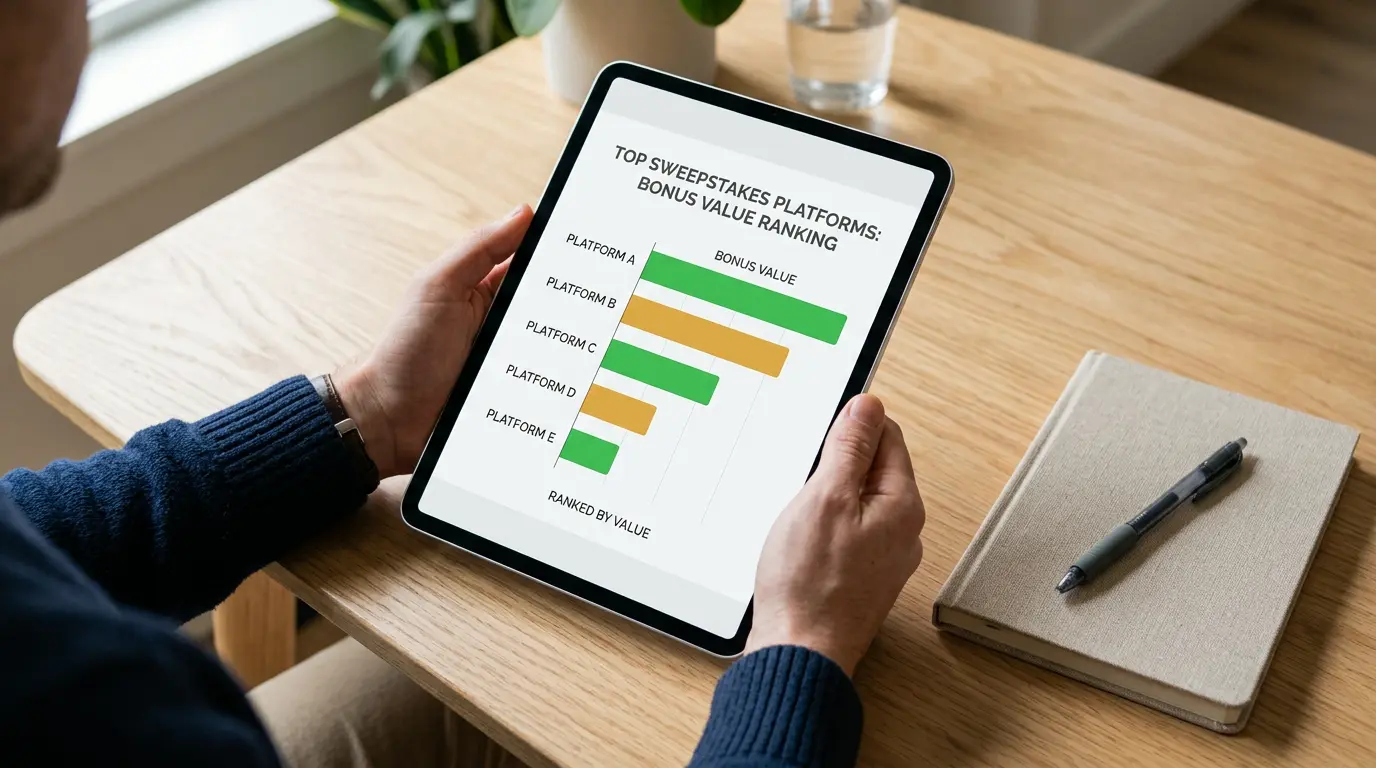
Ranking sweepstakes casinos by "bonus value" sounds straightforward until you realize that a bigger SC number at sign-up does not guarantee a better deal. Our ranking weighs four factors: the raw SC amount, the game selection available in SC mode, the effective payout speed we experienced, and the overall transparency of the platform's terms. Here is how the top contenders stacked up in our early 2026 testing.
Wow Vegas
Wow Vegas leads with 35 free SC and 1,500,000 GC — the largest no-deposit package we recorded. The SC game library runs deep with 700+ slots from providers like Betsoft and Pragmatic Play. Our test redemption cleared in four business days via bank transfer. The 100 SC minimum redemption is the main drawback, meaning you need to grind your free bonus further before cashing out.
Crown Coins Casino
Crown Coins delivers 30 free SC and 1,000,000 GC with a 50 SC redemption minimum — reachable from the sign-up bonus alone if variance cooperates. The lobby is smaller (~350 games) but well curated toward high-RTP slots. Our payout took five days. Frequent social media SC giveaways supplement the initial bonus nicely.
Stake.us
Stake.us offers 25 SC and 250,000 GC with fast crypto redemptions — one to three days for Bitcoin, Litecoin, or Ethereum. The game library is extensive (500+ titles), the interface is polished, and the 50 SC redemption minimum is manageable. Stake.us also runs daily races and login promotions that keep SC ticking upward. KYC verification triggers at a lower threshold than competitors, so have your documents ready.
McLuck
McLuck's 25 SC sign-up bonus is competitive, paired with an aggressive daily login calendar that yielded 15 additional SC in our first two weeks of testing. The 400+ game library and 50 SC redemption floor make it practical for free-to-play users. Payout speed averaged three to four days. The mobile experience is particularly clean.
High 5 Casino
High 5 offers 25 free SC with proprietary, in-house games you will not find elsewhere. The full library is SC-eligible, and payouts took three to five days in our tests. Worth noting: the platform has faced legal issues, including a $24.9 million fine in Washington state, which is relevant context even if it does not affect your day-to-day play.
Chumba Casino
Chumba is the oldest name in the space (operated by VGW) with just 2 SC at sign-up — the lowest on this list by far. The trade-off is the largest game library, the longest track record, and consistent daily login SC rewards. The 100 SC redemption minimum makes this a slow-build platform. Our test payout took eight days.
Pulsz
Pulsz offers 5.3 SC and 367,000 GC with a smooth interface, 650+ games, and fast payouts (two days in our test). Cryptocurrency withdrawals are supported. The 100 SC redemption floor is the primary barrier for free players.
Zula Casino
Zula rounds out the list with 10 SC, 250,000 GC, and a 50 SC redemption minimum. It is a newer entrant with a smaller but growing library (~200 titles). Our payout processed in three days. The interface is stripped down and beginner-friendly — appealing if larger platforms feel overwhelming.
Step-by-Step — Claiming Your Free SC in Under 5 Minutes
The registration process at sweepstakes casinos is deliberately simple — these platforms want you in the lobby fast. That said, there are a few steps where new players stumble, and skipping them can delay your bonus or lock you out of redemption later. Here is exactly what the process looks like, based on our experience across eight platforms.

Before You Start
Pre-Registration Checklist
- Valid email address you can access immediately (confirmation links expire quickly)
- Phone number for SMS verification
- Your real legal name and date of birth — casinos will cross-reference these during KYC, and mismatches cause redemption delays
- A rough idea of which state you are in — six states currently ban sweepstakes casinos entirely, and nine more are considering bans in 2026
The Registration Flow
Step 1: Visit the casino's landing page. Click "Sign Up" or "Join Free." Enter your email address and create a password. Some sites allow Google or Facebook OAuth, which is faster but links your social account to the casino.
Step 2: Enter personal details. Full legal name, date of birth, and residential address. The address verifies your state eligibility. If your geolocation data is inconsistent (VPN, for example), the system may flag your account.
Step 3: Verify your email and phone. A confirmation email and SMS code arrive within seconds on most platforms. At Stake.us, we went from registration to verified account in under 60 seconds. Chumba's email took nearly three minutes.
Step 4: Claim your bonus. On most platforms, the no-deposit SC credits automatically once verified. A few (Pulsz, Zula) require navigating to a "Promotions" tab and clicking "Claim." Either way, the SC appears in your balance within moments.
Step 5: Start playing. Switch to SC mode in the game lobby and start spinning. Your free SC are live and wagering toward the playthrough requirement.
Common Mistakes That Cost You Time
The biggest pitfall is entering a fake name or wrong date of birth. The casino lets you play just fine — but the moment you try to redeem, KYC verification flags the mismatch and freezes your account. We saw one tester lose six days to this at High 5 Casino. Use your real information from the start. The second common mistake is registering from a restricted state. The site may let you create an account but block redemption later.
Five Ways to Earn Free Sweeps Coins Without Spending a Dime
The sign-up bonus gets all the search traffic, but it is only one of at least five no-purchase methods that sweepstakes casinos use to distribute Sweeps Coins. If you are serious about building an SC balance without reaching for your wallet, you need to stack these channels. Here is each method, how it works in practice, and how much SC you can realistically expect.
🪙 No-Deposit → Cash-Out · Free-Play Planner
How Long to Your First Redemption?
A 25 SC sign-up bonus feels great — until you learn the redemption minimum is 50–100 SC. This planner takes the "eventually" out of the equation: pick a casino, choose which free channels you'll use (daily logins, mail-in AMOE, referrals — no purchase, ever), and see exactly how many days of grinding it takes to reach a cash-out. At 1 SC ≈ $1, the floor is real money.
Sign-Up No-Deposit Bonus
This is the one you already know — register, verify, receive SC. The value ranges from 2 SC (Chumba Casino) to 35 SC (Wow Vegas) across major platforms. It is a one-time credit that lands in your account within minutes of verification. If your goal is to reach the redemption minimum quickly, prioritize platforms with higher sign-up SC. Nothing stops you from registering at multiple sweepstakes casinos simultaneously and collecting bonuses from each — every site is independent.
Daily Login Rewards
Almost every sweepstakes casino offers a daily login bonus, and these are the backbone of any free-to-play strategy. Some platforms give a flat SC amount each day (0.3–1 SC is typical), while others use escalating calendars where rewards increase on consecutive days. A seven-day streak at Crown Coins, for example, yields roughly 5 SC cumulative.
The math adds up. Logging in daily at a single platform for 30 days can net 10–30 SC. Across three or four casinos, that is 40–120 SC per month — enough to reach redemption thresholds without spending. The catch: miss a day and many platforms reset your streak counter, dropping you back to the base reward.
AMOE — Alternate Method of Entry (Mail-In Requests)
AMOE is the legal anchor of the entire sweepstakes model. Every legitimate sweepstakes casino must offer a free entry method, and mail-in is the standard format. You send a handwritten postcard or letter to the casino's designated address requesting free Sweeps Coins, and the operator credits your account within 7–14 business days.
Most platforms require a standard-size postcard or a 3×5 card inside a stamped envelope with your registered username, legal name, and the specific request. Some cap AMOE at one request per day; others allow one per stamp. At $0.78 per First-Class letter, this is one of the cheapest SC accumulation methods available. Chumba Casino historically credits 5 SC per valid request. Players who batch-print postcards and mail weekly report steady growth without any digital interaction.
Social Media Giveaways and Contests
Sweepstakes casinos run frequent promotions on Facebook, Instagram, X, and Discord — "like and comment to win 50 SC," trivia contests, milestone celebrations. The SC amounts can be significant, but odds depend on entry volume. The expected value per entry is low, the variance is high, and the time cost is minimal. For players already logging in daily, adding social media giveaways to the routine costs nothing.
Referral Programs
Several platforms reward you for bringing in new players — typically 10–50 SC per successful referral once the new account is verified. Stake.us runs one of the more generous programs, with McLuck and Crown Coins also offering incentives. The limitation is obvious: you need interested friends, and most platforms cap referral rewards per period. But if someone in your network would sign up anyway, the bonus is free value left on the table.
Wagering Requirements Decoded — What 1× Playthrough Really Means
If you have spent any time around traditional online casino bonuses, you know that wagering requirements are where the deal usually falls apart. A $100 bonus with a 35× playthrough means you need to wager $3,500 before you can withdraw a cent. The house edge grinds most of that bonus to dust long before you clear the requirement.
Sweepstakes casinos play by different rules. The industry standard playthrough is 1×, which means you need to wager your SC balance exactly once before it becomes eligible for redemption. If you receive 25 SC, you place 25 SC worth of bets — regardless of whether you win or lose those bets — and the requirement is met. That is not a typo. One time through.
How 1× Playthrough Works in Practice
Let's trace a realistic scenario. You sign up at Stake.us and receive 25 free SC. You switch to SC mode, load a slot with a 96% RTP, and start spinning at 0.50 SC per spin. After 50 spins, you have wagered your full 25 SC. The playthrough is now cleared. Your remaining SC balance — let's say variance was kind and you have 22 SC left — is fully redeemable once you hit the minimum redemption threshold (50 SC at Stake.us).
Notice the subtlety: clearing the wagering requirement does not mean you can cash out immediately. You still need to reach the minimum redemption amount, which is a separate hurdle. At 22 SC post-playthrough, you would need to accumulate another 28 SC through daily logins, AMOE, or additional play before Stake.us lets you submit a redemption request.
What Counts Toward Wagering
On every platform we tested, all SC wagers on all SC-eligible games count equally toward the playthrough requirement. There is no weighting system where slots contribute 100% but table games contribute only 10%, as you often see at traditional online casinos. A dollar wagered on blackjack counts the same as a dollar wagered on a slot. This simplicity is one of the genuine advantages of the sweepstakes model from a player's perspective.
The Catch — And There Is Always a Catch
The 1× playthrough is genuinely player-friendly compared to traditional casinos. But do not confuse low wagering with guaranteed profit. The house still has an edge, RTP does not guarantee short-term returns, and the minimum redemption threshold means your balance needs to survive well beyond the initial wagering clear. A few platforms also impose time limits on bonus SC — if you do not wager your sign-up SC within 14 or 30 days, the bonus expires. We found this condition at two of the eight platforms tested, buried in the terms and conditions.
From Sweeps Coins to Real Cash — Redemption Walkthrough
This is the section that separates sweepstakes casinos from social casino apps with no cash-out option. When you redeem Sweeps Coins, you are converting virtual promotional credits into actual U.S. dollars (or cryptocurrency, depending on the platform). The process is not complicated, but it does involve identity verification, minimum balance requirements, and — for the first time in most players' experience — the IRS.
Redemption Step by Step
Step 1: Meet the minimum SC threshold. Each platform sets its own floor. In our testing, the range was 50 SC (Stake.us, McLuck, Crown Coins, High 5, Zula) to 100 SC (Wow Vegas, Chumba, Pulsz). At a 1:1 conversion rate, 50 SC = $50 cash. You cannot redeem partial balances below this floor.
Step 2: Ensure your playthrough is cleared. Your account dashboard should show that the wagering requirement (1× on all platforms we tested) is complete. If you see an "in progress" indicator or a locked redemption button, you still have SC that need to be wagered.
Step 3: Complete KYC verification. Before your first cash-out, the casino requires identity documents: a government-issued photo ID, proof of address (utility bill or bank statement), and sometimes a selfie. Upload quality matters — blurry photos or expired IDs get rejected. We recommend completing KYC proactively, before you attempt to redeem, so the wait does not surprise you.
Step 4: Submit the redemption request. Navigate to the cashier section, select "Redeem SC," enter the amount, and choose your payout method — bank transfer (ACH), prepaid card, or cryptocurrency at some platforms. Crypto payouts were consistently faster in our tests.
Step 5: Wait. Processing times vary. Stake.us was fastest (crypto cleared in under 24 hours on two of three tests). Chumba was slowest (eight days for bank transfer). Most platforms fell in the three-to-five-day range.
Tax Implications You Should Not Ignore
Here is where most guides stop, and here is where the money gets real. Sweepstakes casino winnings are taxable income in the United States. The IRS treats them differently from traditional gambling winnings: instead of a W-2G form, sweepstakes operators report payouts on Form 1099-MISC. Under current rules, the platform must issue a 1099-MISC when your total redemptions in a calendar year reach or exceed the reporting threshold, which has been raised to $2,000 starting with the 2026 tax year under the One Big Beautiful Bill Act — up from the previous $600 threshold, per IRS Instructions for Forms W-2G and 5754.
If your annual SC redemptions exceed $5,000, the platform is required to withhold 24% for federal taxes before paying you, according to IRS instructions. That means on a $5,000 redemption, $1,200 goes to the IRS before the money reaches your bank account. You are still responsible for reporting the full amount on your tax return, and depending on your state, there may be additional state income tax obligations.
One more wrinkle: unlike regulated gambling, sweepstakes casino losses are generally not deductible against your winnings because the activity is classified as promotional prize income, not gambling under IRS definitions. Consult a tax professional if your redemptions are significant — the nuance here matters more than a guide can cover.
Tax treatment assumes you are in a state where you can actually redeem. That is not a given everywhere — and the list of restricted states grew significantly in 2025.
State-by-State Availability — Where You Can and Can't Play
Sweepstakes casinos like to market themselves as "available nationwide," and for years, that was roughly true. Not anymore. The regulatory landscape shifted dramatically in 2025, and 2026 is shaping up to be even more disruptive. If you are planning to claim a free SC casino no deposit bonus, you need to know whether your state even allows it.
States That Have Banned Sweepstakes Casinos
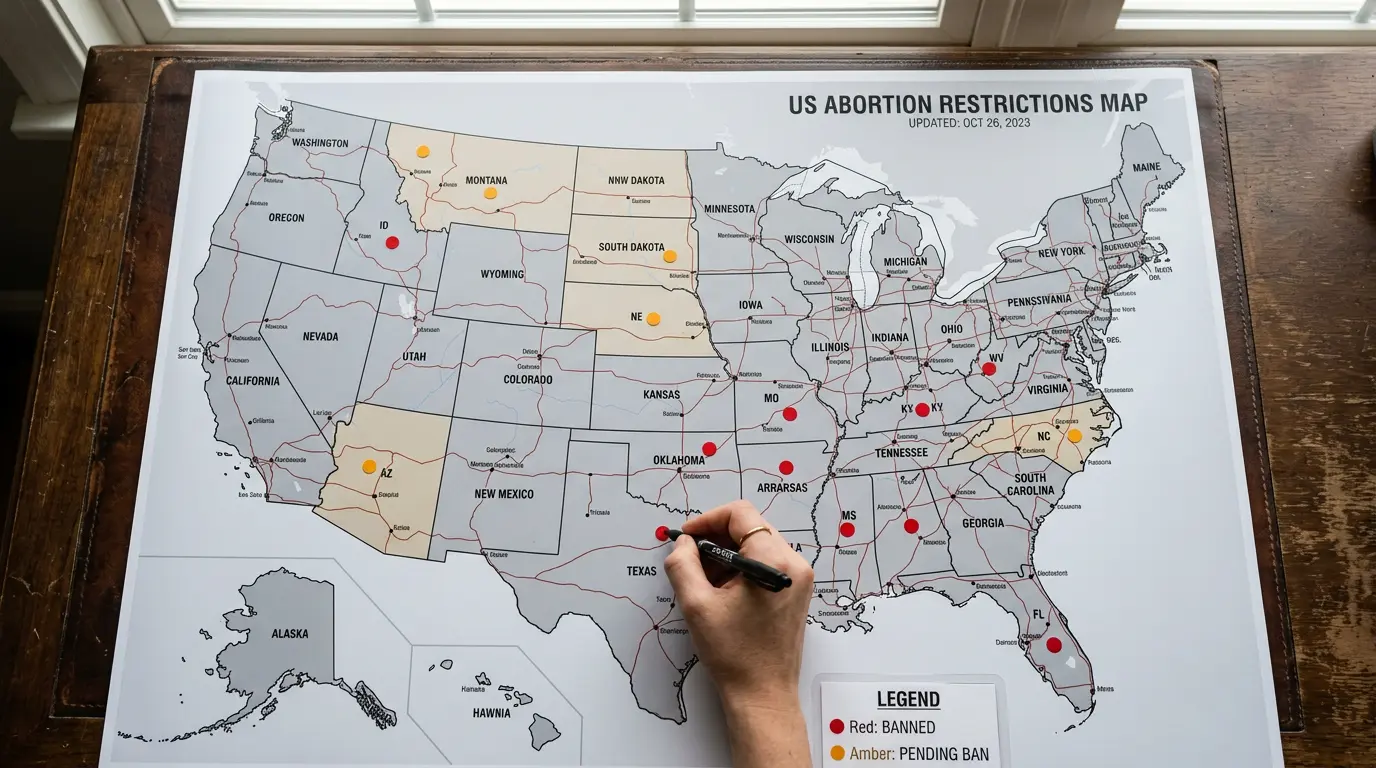
As of early 2026, six states enacted legislative bans on sweepstakes casinos during the 2025 session: California (AB 831, signed October 11, 2025), New York (S 5935), Connecticut, Montana, New Jersey, and Nevada, per Gambling Insider's coverage. These bans join the existing restrictions in Washington and Idaho, which have long prohibited the model. If you reside in any of these states, sweepstakes casinos are off-limits — the platforms will either block your registration or deny redemption during KYC.
California's ban was the most impactful in dollar terms. The state accounted for roughly 20% of total industry sales, according to iGaming Business's year-in-review citing Eilers & Krejcik data. New York alone generated an estimated $762 million in sweepstakes revenue in 2024. Losing these two markets forced operators to recalculate growth projections almost overnight.
States with Pending or Proposed Bans in 2026
The ban wave is not over. Nate Friend, chairman of the Indiana Gaming Commission, testified before the state's House Public Policy Committee that "Indiana is one of nine states tackling this issue during the 2025–2026 legislative session, along with Maine, Arkansas, Maryland, Mississippi, Florida, Illinois, Ohio, and Massachusetts," as reported by Sweepsy.
The pace of these proposals varies. Indiana's HB 1052 has already passed the House by an 87–11 vote. Mississippi's SB 2104 passed the Senate but stalled in a House committee. Florida's HB 591, an 86-page bill, proposes classifying sweepstakes casino operations as a third-degree felony. Not all of these bills will become law — legislative pipelines are unpredictable — but the direction of travel is unmistakable.
Enforcement Beyond Legislation
Even in states without formal bans, regulators have been active. More than 100 cease-and-desist letters were sent by state regulators in Arizona, Michigan, Louisiana, Maryland, and others to sweepstakes operators in 2025, per iGaming Business. At the municipal level, Baltimore filed a civil lawsuit in March 2026 against six operators, with Mayor Brandon Scott stating that "these companies are targeting our communities, including young people and minors, and profiting while ignoring the law," as Gambling Insider reported.
The regulatory push is bipartisan. Shawn Fluharty, president of the National Council of Legislators from Gaming States, described the issue as one that "has brought lawmakers together" around the position that the model represents "illegal gambling and revenue theft in many states," per iGaming Business.
What This Means for You
Before signing up at any sweepstakes casino, verify your state's current legal status. The landscape is evolving quickly, and a platform that accepted players from your state last year may not today. Check the casino's terms of service for a restricted-states list, and keep an eye on your state legislature's session calendar if you are in one of the nine pipeline states.
Sweepstakes Casinos vs Real-Money Casinos — An Honest Comparison
The sweepstakes model exists because it is not traditional gambling — at least, not legally. But from a player's perspective, the experience often looks, feels, and costs like gambling. Understanding where the two models genuinely differ (and where the gap is thinner than operators like to admit) is essential if you are deciding where to spend your time and, eventually, your money.
Scale and Revenue
Legal commercial gaming in the United States generated a record $78.72 billion in gross gaming revenue in 2025, according to the AGA's Commercial Gaming Revenue Tracker. Sweepstakes casinos are roughly seven times smaller by revenue, but their 60–70% CAGR through the early 2020s dwarfs the regulated market's 9.2% growth. That convergence is one reason regulators and the traditional industry are paying close attention. However, the momentum is shifting: Eilers & Krejcik Gaming revised its 2025 net revenue estimate for the sweepstakes sector from $4.7 billion down to $4 billion, and projects a 10% decline to $3.6 billion in 2026 as operators exit banned states, according to Sweepsy's reporting on EKG data.
Regulation and Player Protection
Licensed online casinos in states like New Jersey, Michigan, and Pennsylvania operate under strict frameworks: mandatory responsible-gaming tools, self-exclusion registries, dispute resolution, and routine audits. Sweepstakes casinos face none of these requirements in most states. Some operators voluntarily adopt measures (VGW's spending-limit system, for example), but there is no mandate and no enforcement mechanism. Meanwhile, sweepstakes operators are aggressively capturing attention: approximately 50% of all online casino advertisements seen by U.S. consumers in early 2025 came from sweepstakes platforms, according to Sensor Tower data compiled by the AGA's Sweepstakes Casino Player Profile report.
Tres York, vice president of government relations at the AGA, stated in a July 2025 press release: "Consumers see right through the 'sweepstakes' casino facade and they're calling it what it is: gambling." Dan Hartman, senior advisor at GMA Consulting and former Director of the Colorado Division of Gaming, put it more bluntly at the NCLGS Winter Conference: "The one thing I've said all along is you can't all break in through the backdoor. Companies pay a lot to get licensed," per iGaming Business. The AGA's position is that the sweepstakes model creates an uneven playing field where regulated operators pay licensing fees and fund responsible-gaming programs while sweepstakes casinos capture revenue without comparable obligations.
Taxes — The Biggest Structural Gap
This is where the numbers get stark. Legal gambling states collected $15.9 billion in gaming taxes in 2024. Sweepstakes casinos contributed zero to that total, according to data from iGaming Business citing AGA and Waterhouse VC analysis. For state legislators looking at budget shortfalls, that $0 figure is the single most powerful argument for banning or regulating the sweepstakes model. Players should understand that this tax gap is not just an abstract policy debate — it is the driving force behind every ban bill working its way through state legislatures right now.
Legal Risk and Class Actions
More than 100 class-action lawsuits had been filed against sweepstakes casino operators by November 2025, according to CasinoBeats citing attorney Daniel Wallach's tracking. Utah alone saw 23+ filings in a single month. VGW faced more than 20 lawsuits; High 5 Games paid $24.9 million to settle with Washington state and another $1.5 million in Connecticut. For players, the risk is mostly indirect — you will not be sued — but litigation creates platform instability that can affect terms, state availability, and bonus generosity.
The Industry's Response
The Social Gaming Leadership Alliance (SGLA), an industry group formed in 2025, has argued for regulation rather than prohibition. Jeff Duncan, the SGLA's executive director and a former U.S. representative, has stated publicly that operators "want to be regulated" and "want to pay taxes," per iGaming Business. Whether that willingness translates to legislation remains an open question.
| Factor | Sweepstakes Casinos | Licensed Online Casinos |
|---|---|---|
| Legal Basis | Promotional sweepstakes law | State gambling licenses |
| Available States | ~39 (and shrinking) | 7 states with iGaming |
| Gaming Taxes Paid | $0 | $15.9B industry-wide (2024) |
| Regulatory Oversight | Minimal / voluntary | State gaming commissions |
| Responsible Gaming Mandates | Voluntary | Required by law |
| Deposit Required | No (free entry available) | Yes |
| Typical Wagering Requirement | 1× | 20×–40× |
Responsible Play — Tools, Limits, and Warning Signs
Sweepstakes casinos market themselves as entertainment — not gambling. But the data tells a more complicated story, and ignoring it does not serve anyone reading this guide. Whether or not the law classifies your activity as gambling, the behavioral patterns, the neurological responses, and the financial risks can be functionally identical.
What Players Actually Think
The American Gaming Association commissioned a survey of 2,250 sweepstakes casino players in June 2025, and the findings undercut the "it's just for fun" narrative. Ninety percent of sweepstakes casino users said they consider the activity to be gambling — 59% calling it "definitely gambling" and 31% "probably gambling" — while 69% described sweepstakes casinos as platforms to wager real money and 68% cited winning real money as their primary motivation, according to the AGA's Sweepstakes Casino Player Profile & Advertising Trends report. The players themselves are not confused about what they are doing, even if the legal framework draws a distinction.
The Broader Problem Gambling Landscape
Approximately 20 million American adults experienced at least one symptom of problem gambling in 2024, down from 27.5 million in 2021, according to the National Council on Problem Gambling's NGAGE 3.0 survey. The decline is encouraging, but the absolute number remains staggering. A separate NCPG/Harris Poll survey from February 2026 found that 65% of adults over 21 reported having gambled before turning 21, and 79% of Americans consider gambling addiction as serious as — or more serious than — other forms of addiction.
Derek Longmeier, president of the NCPG board of directors, emphasized the need for systemic solutions: "This new research shows that the nationwide efforts in responsible gambling and public awareness are making a positive impact, but the work is far from over. We must build on this momentum by embedding problem gambling into the broader public health infrastructure," as noted in an NCPG press release.
What Tools Do Sweepstakes Casinos Actually Offer?
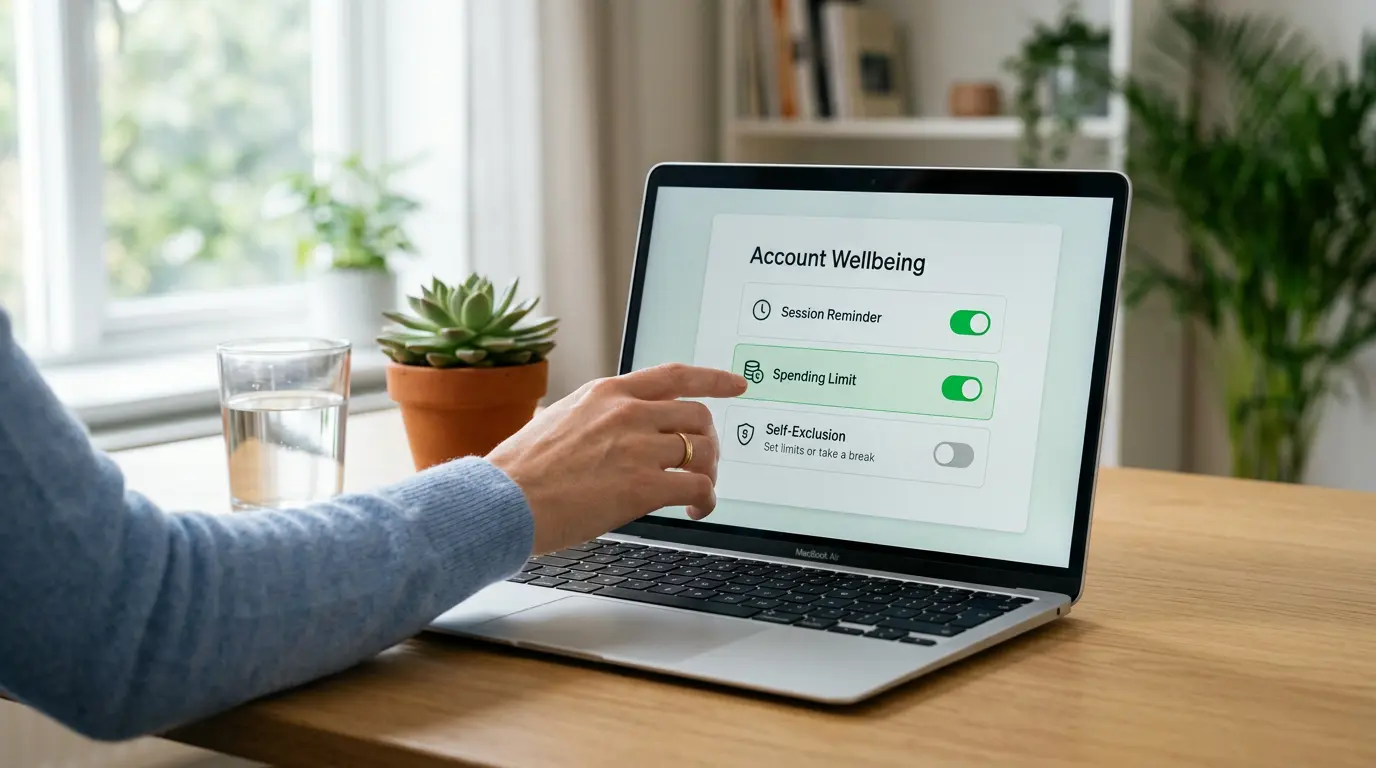
This varies wildly by operator, and that inconsistency is itself a problem. Unlike regulated online casinos, sweepstakes platforms are not required to provide self-exclusion programs, deposit limits, or reality checks. Some do anyway. VGW (Chumba Casino, Global Poker) has implemented personalized spending limits that activate once a player exceeds $2,000 in cumulative purchases, requiring financial documentation before allowing continued spending. Stake.us allows users to set session time reminders and voluntary deposit limits through their account settings.
Other platforms offer almost nothing beyond a link to the National Problem Gambling Helpline (1-800-MY-RESET). The AGA has criticized this gap directly, noting in a 2024 policy statement that sweepstakes operators maintain "weak (if any) responsible gaming protocols and few, if any, self-exclusion processes."
Warning Signs to Watch For
Problem gambling does not usually announce itself with a dramatic crisis. It creeps in: chasing losses by making Gold Coin purchases after a bad session, logging in to multiple sites throughout the day to collect every bonus, feeling irritated when you miss a streak, or spending time or money you had allocated elsewhere. The dual-currency model can obscure real spending, since GC purchases feel more like buying game credits than placing bets. If your Gold Coin spending exceeds your entertainment budget, step back and reassess.
If you or someone you know is experiencing problem gambling behavior, contact the National Problem Gambling Helpline at 1-800-MY-RESET (call or text, 24/7) or chat at ncpgambling.org. The previous number, 1-800-522-4700, also remains active. The service is free, confidential, and available in all 50 states.
Frequently Asked Questions
Are free SC casino bonuses really free, or is there a hidden cost?
Yes, the sign-up Sweeps Coins require no payment. You register, verify your identity, and the SC credits automatically. There is no credit card on file, no trial subscription, and no hidden charge. The indirect "cost" is your attention and marketing value as a registered user. Sweepstakes casinos use no-deposit bonuses as acquisition tools, knowing that a percentage of free players will eventually purchase Gold Coins. Industry-wide, only about 12% of users ever make a purchase — the remaining 88% play for free indefinitely. Just be aware that the platform is designed to encourage spending, and the path from free player to paying customer is intentionally seamless.
Do I have to pay taxes on Sweeps Coins I redeem for cash?
Yes. Sweepstakes winnings are taxable income under U.S. federal law, reported as "Other Income" on Form 1040, Schedule 1. Operators issue Form 1099-MISC (not W-2G) when your annual redemptions reach the reporting threshold — raised to $2,000 for the 2026 tax year under the One Big Beautiful Bill Act, up from $600 previously. Above $5,000, the platform withholds 24% for federal taxes before paying you. State taxes may also apply. Unlike traditional gambling, you generally cannot deduct sweepstakes losses against winnings because the IRS classifies payouts as promotional prize income. Consult a tax professional if your redemptions are substantial.
Can I play at sweepstakes casinos from any U.S. state?
No. Six states enacted bans during the 2025 legislative session — California, New York, Connecticut, Montana, New Jersey, and Nevada — joining existing restrictions in Washington and Idaho. Nine additional states (Indiana, Maine, Arkansas, Maryland, Mississippi, Florida, Illinois, Ohio, Massachusetts) are considering ban legislation during 2025–2026. Beyond outright bans, regulators in other states have sent over 100 cease-and-desist letters to operators. Before registering, check the platform's restricted-states list in its terms of service and verify that your state has not enacted new restrictions since your last check.
Our Testing Methodology
Every claim in this guide is backed by firsthand testing and verified data. Our team registered fresh accounts at each sweepstakes casino between January and March 2026, using real personal information from U.S.-based testers in eligible states. We claimed every no-deposit bonus, played through the wagering requirements on a mix of slot and table games, submitted redemption requests, and timed the entire process from sign-up to cash-in-hand.
For industry data and statistics, we relied exclusively on primary and high-credibility secondary sources: KPMG's sweepstakes gaming industry primer, Eilers & Krejcik Gaming's quarterly monitors, the American Gaming Association's revenue tracker, the National Council on Problem Gambling's NGAGE 3.0 survey, and IRS documentation for tax guidance. No statistics were invented, rounded for convenience, or sourced from unverifiable outlets. Expert quotes are attributed with name, title, organization, and publication context.
We do not accept payment from sweepstakes casinos for rankings or reviews. Bonus amounts, payout speeds, and platform scores reflect our independent testing. If an offer changes after publication, we update this page as quickly as possible — but always verify current terms directly with the casino before signing up.