Setting Responsible Gaming Limits at Sweepstakes Casinos
Licensed online casinos operate under state gaming commissions that mandate responsible gambling tools — self-exclusion lists, deposit limits, mandatory disclosures, and cool-off periods. Sweepstakes casinos, by contrast, operate outside that regulatory framework. Some platforms have voluntarily adopted responsible gaming features. Many haven’t. The tools exist — but you have to turn them on, and sometimes you have to look hard to find them.
The disconnect between how players experience sweepstakes casinos and how the industry classifies them is stark. An AGA survey of 2,250 players in 2025 found that 69% of sweepstakes casino users consider their activity to be gambling, and 68% said their primary motivation is winning real money. Players aren’t confused about what they’re doing. They’re playing for cash, with real emotional and financial stakes. The question is whether the platforms provide adequate tools to manage those stakes — and the honest answer, across the industry, is inconsistently.
Responsible Gaming Features by Platform
The responsible gaming toolkit at sweepstakes casinos ranges from comprehensive to nearly nonexistent, depending on the platform. The largest operators have invested in player protection features — partly out of genuine concern, partly because doing so strengthens their legal defense against class actions and regulatory scrutiny.
VGW, which operates Chumba Casino and LuckyLand Slots, has implemented one of the more detailed systems. According to data presented at the Online Social Games Expo, VGW sets personalized spending limits based on player behavior. The average player spends about $25 per week, and when cumulative spending reaches $2,000, the platform requires financial verification — bank statements or tax returns — before allowing further purchases. The system then establishes an individualized spending cap based on what the player can demonstrably afford.
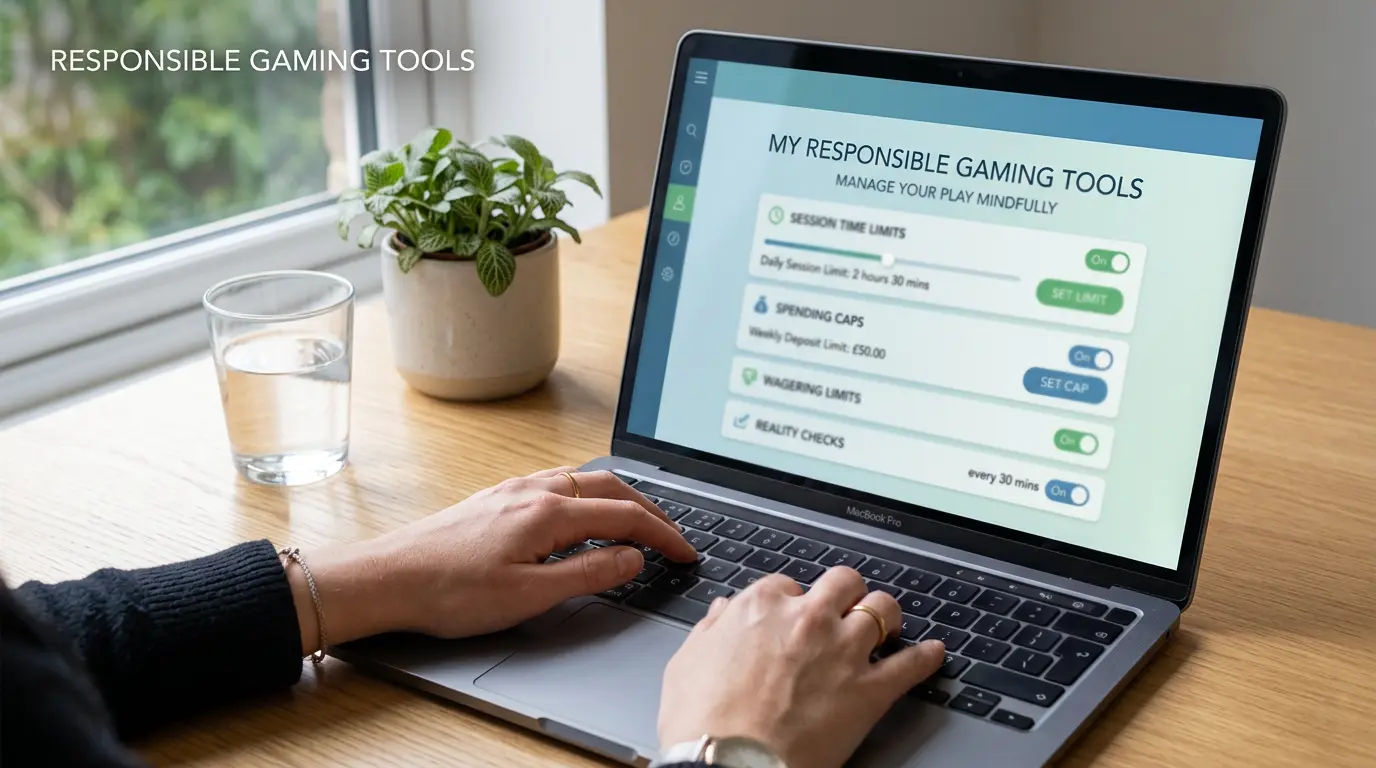
That model is the exception, not the norm. Mid-tier and smaller platforms typically offer a basic set of tools: session time reminders, voluntary deposit limits on gold coin purchases, and a self-exclusion option that locks the account for a period ranging from 24 hours to permanent closure. These features are usually buried in account settings rather than presented prominently during gameplay. A player in the middle of a losing streak is unlikely to pause, navigate to settings, and activate a cool-off period. The tool exists; the friction to reach it undermines its effectiveness.
Derek Longmeier, President of the Board of Directors at the National Council on Problem Gambling (NCPG), emphasized the broader challenge when the NCPG published its NGAGE 3.0 survey results: responsible gambling efforts are making a positive impact, but the work must expand, particularly by embedding problem gambling into broader public health infrastructure. For sweepstakes casinos, which sit outside traditional regulatory channels, that embedding hasn’t happened. Players at licensed casinos benefit from state-mandated protections. Players at sweepstakes casinos rely on whatever the operator chooses to provide.
What you can do right now: before playing at any platform, check whether it offers session time limits, spending caps, and a self-exclusion mechanism. If none of these are available, the platform is asking you to manage your own behavior entirely without guardrails — in an environment designed to keep you playing. That’s a risk factor worth taking seriously.
Recognizing Early Warning Signs
Problem gambling doesn’t announce itself with a dramatic breaking point. It builds gradually — a pattern of increasing time spent, rising frustration, and a shifting relationship with money that feels normal until it isn’t. The NCPG’s NGAGE 3.0 survey estimated that approximately 20 million American adults experienced at least one symptom of problem gambling in 2024, a decline from 27.5 million in 2021 but still a staggering number. A separate NCPG study conducted with Harris Poll found that 65% of adults over 21 had participated in gambling before turning 21, suggesting early exposure is nearly universal.
In the context of sweepstakes casinos, several warning signs are worth monitoring in your own behavior. Spending more time playing than you planned — not by 10 minutes, but by hours — is an early signal. Sweepstakes casino games are designed to be frictionless: the next spin is always one tap away, and there’s no natural stopping point built into the experience. If you consistently open the app for a “quick session” and emerge an hour later, the platform’s retention mechanics are working better on you than you’d like.
Chasing losses is the classic red flag, and it manifests differently at sweepstakes casinos than at traditional ones. Because gold coin purchases are framed as “buying entertainment” rather than “depositing money,” the psychological barrier to buying more is lower. Spending $20 to buy 400,000 gold coins feels different from transferring $20 into a gambling account, even though the financial outcome is identical. If you notice a pattern of buying gold coin packages after your SC balance hits zero — particularly multiple purchases in a single session — that’s chasing losses with extra steps.
Neglecting other activities, hiding play from family or friends, and feeling irritable when you can’t access a platform are all recognized warning signs. None of them mean you have a clinical problem by themselves, but a cluster of them — especially persisting over weeks — warrants honest self-assessment. The earlier you recognize the pattern, the easier it is to adjust.
Where to Get Help — National and State Resources
If you or someone you know is struggling with gambling-related harm, several organizations provide free, confidential support.
The National Council on Problem Gambling operates a 24/7 helpline at 1-800-MY-RESET (1-800-697-3738), its new primary number launched in January 2026. The legacy number 1-800-522-4700 also remains active. They also offer a text-based option: text “800GAM” to 833242. Both channels connect you with trained counselors who can provide immediate support and referrals to local treatment programs. The NCPG’s website at ncpgambling.org maintains a state-by-state directory of treatment providers and support groups.
The National Alliance for Eating Disorders helpline (1-866-662-1235) and the SAMHSA National Helpline (1-800-662-4357) provide broader behavioral health support that may be relevant for co-occurring conditions often associated with problem gambling, including depression and anxiety.
Many states operate their own gambling helplines with counselors trained in local regulations and resources. State-specific resources are typically listed on your state gaming commission’s website or through a search for “[your state] problem gambling helpline.”
Self-exclusion programs at sweepstakes casinos, where available, typically allow you to lock your account for a set period or permanently. The process is usually irreversible for the chosen duration — which is the point. If you decide to self-exclude, do it during a clear-headed moment rather than waiting until you’re in the middle of a session. The decision is always easier to make when the screen isn’t in front of you.
For players who want structure without full self-exclusion, some platforms allow you to set daily or weekly spending limits that can’t be raised for a minimum cooling-off period — usually 24 to 72 hours. This is the lightest-touch intervention available and the one most compatible with continued play. Setting a limit doesn’t mean you have a problem. It means you’re managing a recreational activity with the same discipline you’d apply to any other budget line item. The platforms that make this easy deserve credit. The ones that don’t should make you wonder why.